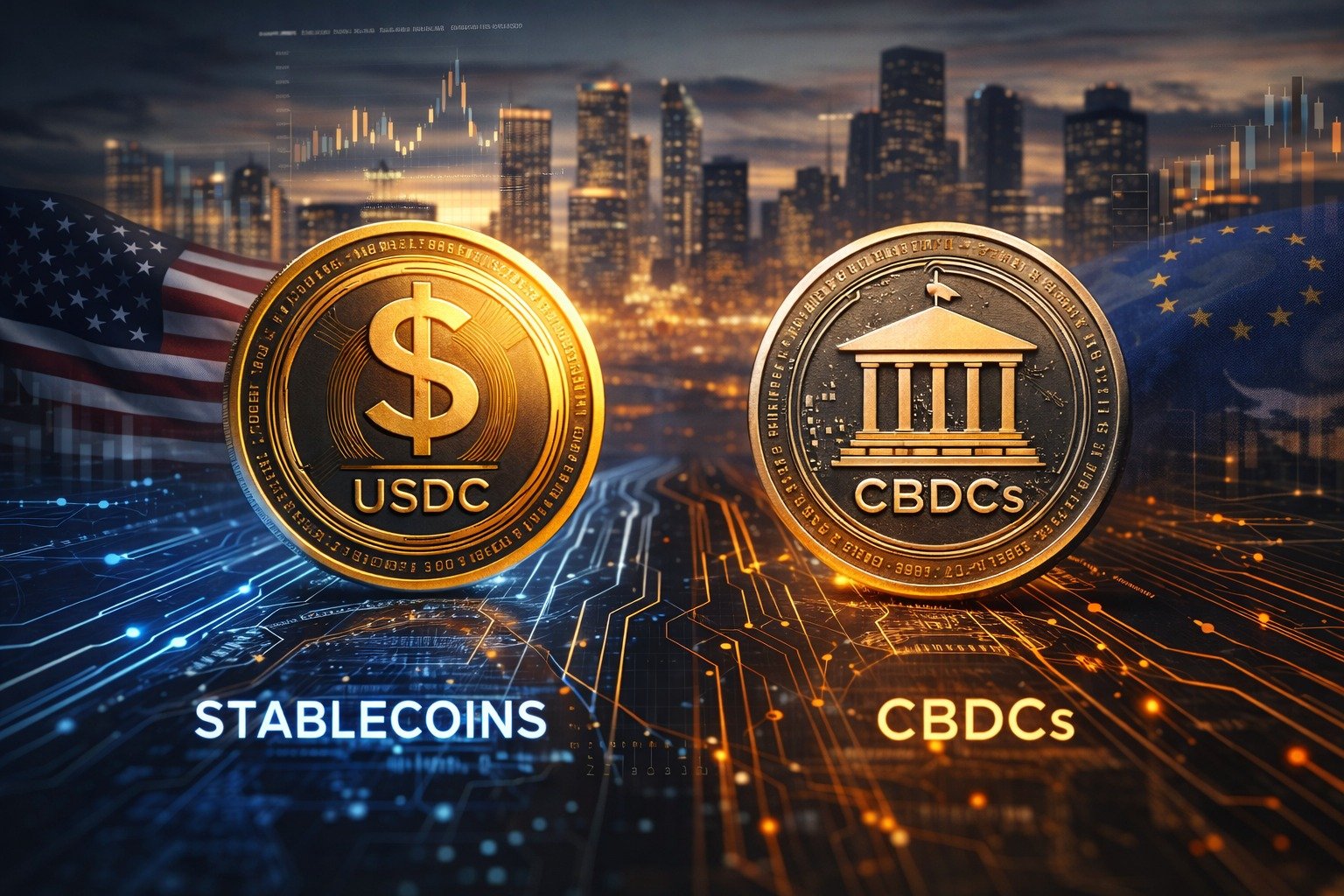
Digital Arms Race.” On one side, we have private-sector Stablecoins like USDC and USDT, which have successfully integrated into the $3.2 trillion crypto economy. On the other, we have CBDCs, government-issued digital currencies currently being piloted or launched by 137 jurisdictions representing over 98% of global GDP.To understand which will win, we must analyze the “Backbone” they provide for the future of money.
- The State of Play: 2026 Market Dynamics
As of March 2026, stablecoins have reached a record circulating supply of over $315 billion. They are no longer just tools for crypto traders; they are becoming the preferred rail for cross-border remittances and corporate treasury management.
Conversely, CBDCs are moving out of the “investigation phase.” The European Central Bank (ECB) is finalizing the legislative framework for the Digital Euro, with an expected issuance path toward 2029. Meanwhile, the U.S. remains a battleground, where the GENIUS Act of 2025 has provided a clear regulatory path for private stablecoins while keeping a “Federal Reserve CBDC” on the back burner. - Stablecoins: The “Innovation Rail”
Stablecoins are winning the sprint because they are permissionless and programmable. In 2026, the “killer app” for stablecoins isn’t just price stability—it’s on-chain finance.
Why Stablecoins Lead in Commercial Intent:
Instant Settlement: While traditional banking (even with FedNow) takes time to clear, a stablecoin transaction on a Layer 2 network like Base or Arbitrum settles in seconds for less than $0.01.
Yield Generation: Through Crypto staking rewards and decentralized lending, stablecoins allow users to earn 4–7% APY—far outpacing traditional high-yield savings accounts.
Programmable Payments: Smart contracts allow businesses to automate payments. For example, a shipping company can program a stablecoin payment to release automatically the moment a GPS tracker confirms a cargo container has arrived at a port.
High-Value Keywords for 2026:
Best crypto exchange US: Users are searching for platforms that offer seamless on-ramps for USDC/USDT.
Crypto wallet (Hardware/Software): As holdings grow, the demand for “Cold wallets for crypto” has reached an all-time high.
Real World Asset (RWA) tokenization: Stablecoins are the primary “currency” used to buy tokenized real estate and T-bills. - CBDCs: The “Sovereignty Rail”
If stablecoins are about innovation, CBDCs are about control and stability. Governments view CBDCs as a way to “upgrade” fiat currency for the 21st century without losing their grip on monetary policy.
The CBDC Value Proposition:
Absolute Safety: A CBDC is a direct liability of the Central Bank. Unlike a stablecoin, which carries “issuer risk” (the risk that the private company fails), a CBDC is as safe as physical cash.
Financial Inclusion: CBDCs can provide digital payment services to the unbanked without requiring a private bank account.
Policy Efficiency: Governments can use CBDCs to distribute “targeted” stimulus or tax refunds instantly, bypassing the friction of the traditional banking system.
The “Privacy Gap”
The biggest hurdle for CBDC adoption in 2026 remains privacy. In the U.S. and EU, citizens are wary of “programmable money” that could theoretically be used to track spending or “freeze” assets based on social or political criteria. This friction is exactly why Stablecoins continue to see higher retail and institutional growth. - The Winner: A Hybrid Ecosystem
By the end of 2026, the question isn’t “Who wins?” but “How do they work together?”
We are moving toward a Tiered Payment Architecture:
Wholesale CBDCs: Used by banks for massive, multi-billion dollar international settlements (replacing the aging SWIFT system).
Private Stablecoins: Used by consumers and businesses for daily commerce, Web3 applications, and high-yield investing.
Deposit Tokens: A new 2026 trend where traditional banks issue their own “stablecoins” backed by their existing reserves. - WealthArca Strategy: How to Position Your Portfolio
For the professional investor, the rise of these digital rails creates several high-yield opportunities:
Invest in Infrastructure: Platforms providing Cross-chain interoperability (like Chainlink) will be essential for moving value between stablecoins and CBDCs.
Utilize Tax Software: With increased regulation (MiCA and GENIUS Act), using Crypto tax software is no longer optional; it is a core part of wealth management.
Hedge with Bitcoin: As both stablecoins and CBDCs are ultimately pegged to fiat, Bitcoin remains the only “neutral” asset that sits outside this system
No responses yet